
Brachial plexus surgery in Nice: nerve grafts, nerve transfers (neurotisations) and muscle transfers
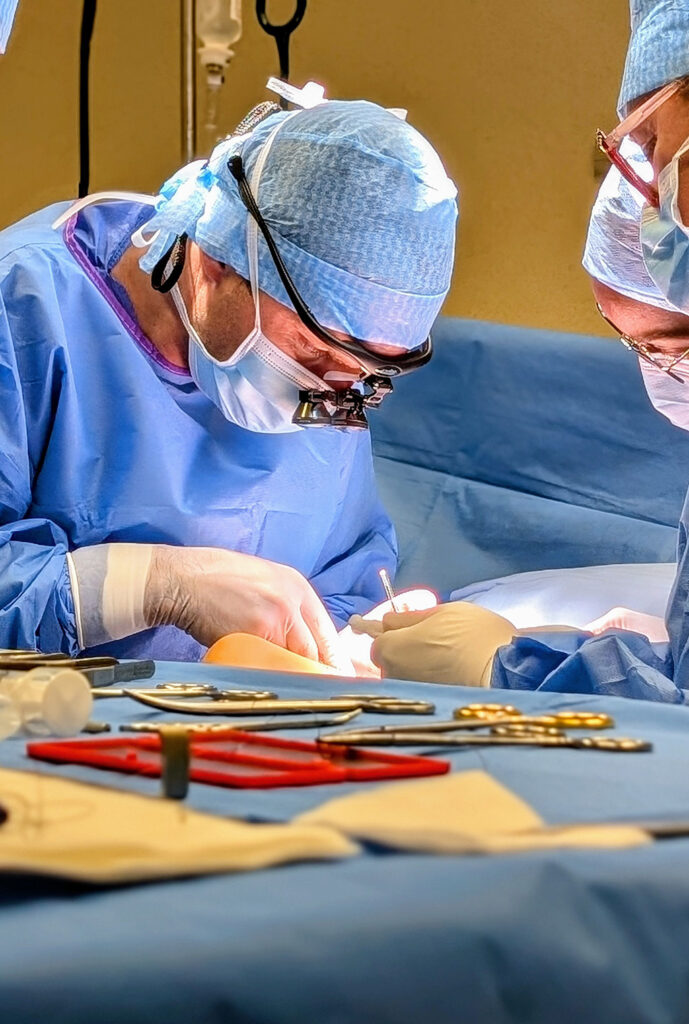
Brachial plexus injuries are a real challenge in nerve surgery. Historically regarded as difficult to treat, these injuries are now managed with sophisticated surgical strategies, supported by major advances in microsurgery, imaging and neuroengineering. With each patient, I draw up a personalised treatment strategy, combining the techniques best suited to their type of injury, their age and their functional goals.
1. Microsurgery and nerve grafts
Microsurgery is the foundation of the surgical treatment of brachial plexus injuries. It makes it possible to reconnect ruptured nerve ends, often by means of autologous nerve grafts. The sural nerve is the most commonly used graft because of its length, its compatible calibre and the ease with which it can be harvested.
Fascicular suture techniques performed under the microscope now allow extreme precision, reducing the risk of neuroma or of axonal misdirection. Biological glues and bioresorbable nerve guidance conduits are also used to promote axonal regeneration.
2. Nerve transfers (neurotisations)
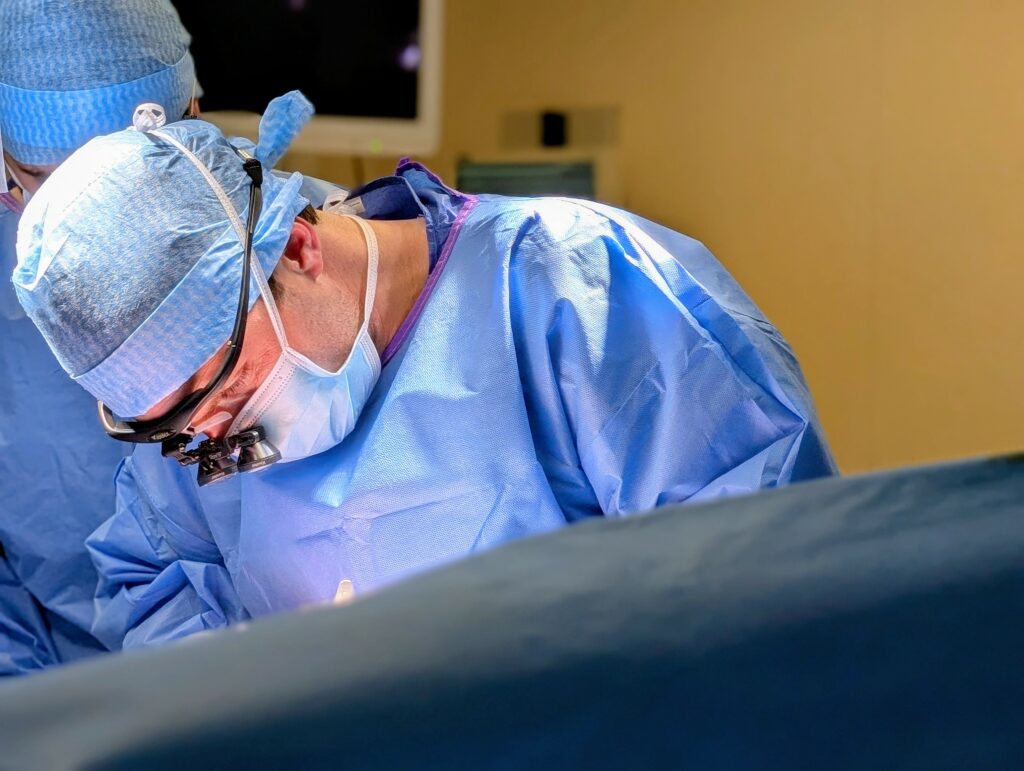
Nerve transfer (neurotisation) is a major advance for preganglionic injuries, particularly root avulsions, in which the nerve root cannot be directly reimplanted. It consists of transferring a functioning (but non-essential) motor nerve to a paralysed target nerve.
Classic examples:
- Intercostal nerves → musculocutaneous nerve (elbow flexion)
- Spinal accessory nerve → suprascapular nerve (shoulder abduction)
- Nerve to the triceps → axillary nerve (external rotation)
These transfers allow rapid reconstruction, with a short distance for axonal regrowth and targeted rehabilitation.
3. Free muscle transfers
In severe, long-standing forms of paralysis, where reinnervation is impossible, free muscle transfers are used. The gracilis muscle, revascularised and reinnervated, is the one most often used to recreate active elbow flexion or grasp.
Transfer of the latissimus dorsi is also performed, particularly to restore shoulder function. These operations require microsurgical expertise for the vascular and nerve anastomoses.
4. Palliative surgery
When motor recovery cannot be expected, palliative surgery aims to improve posture, joint stability and residual function. This includes:
- Tendon transfers (e.g. deltoid to biceps)
- Arthrodesis (fusion of the shoulder or wrist)
- Corrective osteotomies
These procedures are tailored case by case and can considerably improve the patient’s independence.
Technological innovations and future prospects
- Intraoperative imaging: high-resolution MRI or ultrasound systems make it possible to locate the damaged areas more accurately.
- Neuroprostheses and brain–machine interfaces: prototypes make it possible to control orthoses or implants by thought, using electroencephalography or myoelectric signals.
- Cell and gene therapies: under investigation to speed up nerve regeneration and reduce fibrosis.
In conclusion, progress in microsurgery and innovative approaches such as nerve transfer (neurotisation) or muscle transfers have changed the prognosis of brachial plexus injuries.
The future lies in interdisciplinary collaboration between surgeons, researchers, rehabilitation specialists and experts in neurofunctional technologies.
To understand the injuries, the diagnostic work-up and the care pathway, see the article Brachial plexus: traumatic paralysis, surgery and care in Nice.
Book an appointment: for a consultation with Professor Olivier Camuzard in Nice, please go to Contact.