

Dupuytren's Disease
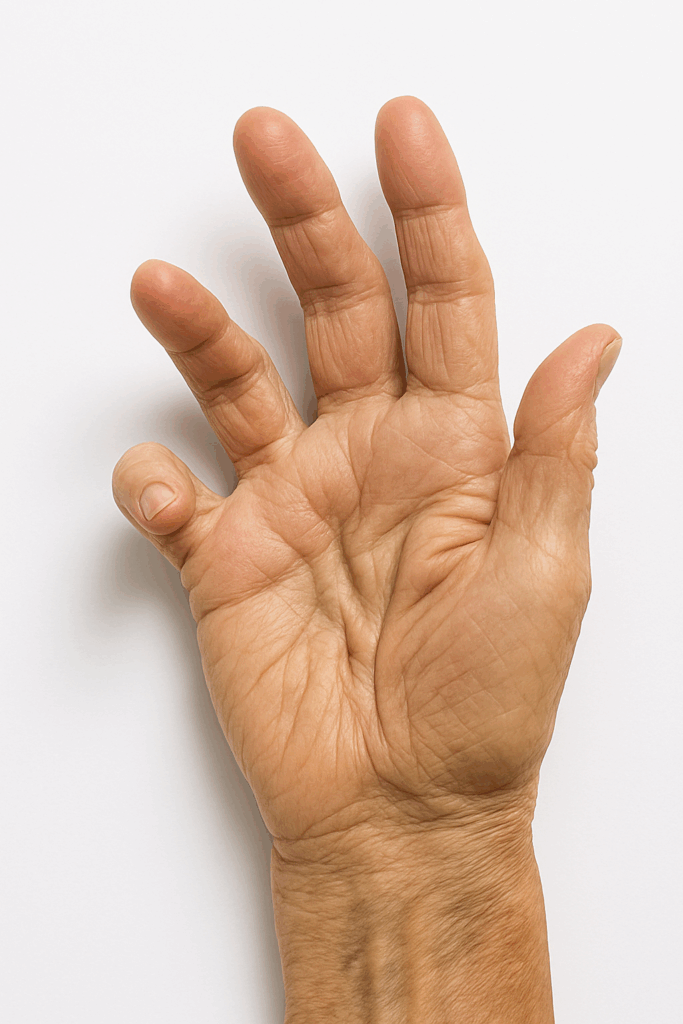
Dupuytren's disease is a progressive fibrosis of the palmar aponeurosis (palmar fascia) that causes the fingers to contract, most often the fourth and fifth, with a gradual loss of extension.
1. What is Dupuytren’s Disease?
Dupuytren’s disease is a progressive condition of the hand that causes the fingers to contract because of fibrosis of the palmar aponeurosis (palmar fascia). It limits finger extension and can interfere with everyday tasks. When the impairment becomes too great, surgery is often necessary.

2. Symptoms and Causes
– Appearance of nodules and cords under the skin of the palm.
– Progressive and irreversible flexion of one or more fingers.
– Difficulty laying the hand flat on a table (positive tabletop test).
– Difficulty with everyday tasks (opening the hand, gripping an object, putting on gloves).
Causes include genetic factors, a family predisposition and associations with other conditions (diabetes, alcoholism).
3. Surgical Treatment
When the contracture of the fingers becomes troublesome and limits the use of the hand, I offer an operation to remove the fibrous tissue responsible for the deformity.
I perform this operation under regional anaesthesia, which allows the patient to go home the same day. The procedure varies according to the stage of the disease:
– Percutaneous needle aponeurotomy (fasciotomy): I divide the cords using a fine needle, a quick technique but one that carries a risk of recurrence.
– Limited fasciectomy: I surgically remove the fibrous cords responsible for the contracture while preserving as much healthy tissue as possible.
– Dermofasciectomy: When the skin is too severely affected, I perform a skin graft after removing the diseased tissue.
The aim is to restore finger extension and to allow a rapid functional recovery.
4. Post-Operative Advice
– Keep the hand elevated for the first few days to limit swelling.
– Follow the wound care instructions to prevent infection.
– Take the prescribed medication to manage pain.
– Avoid sudden movements or strenuous use of the operated hand during the first few weeks.
– Contact the surgeon in the event of redness, severe pain or fever.
5. Rehabilitation and Exercises
– See a specialist physiotherapist to learn suitable exercises.
– Carry out gentle mobilisation exercises as soon as the surgeon allows.
– Do stretching and progressive strengthening exercises for the fingers and wrist.
– Do the exercises regularly to prevent stiffness and promote a full recovery.
– Follow the ergonomic advice in order to return gradually to everyday activities.