
04 92 03 36 62 CHU de Nice – Hôpital Pasteur 2, 30 Voie Romaine, 06000 Nice

De Quervain's disease

De Quervain's disease is a tenosynovitis affecting the tendons of the first dorsal compartment of the wrist, causing pain and functional impairment during thumb movements.

1. What is De Quervain’s Disease?

De Quervain’s disease is a tendinitis of the thumb tendons located at the wrist. It is caused by inflammation of the synovial sheath of the abductor pollicis longus and extensor pollicis brevis tendons, resulting in pain and functional impairment. When medical treatments are not sufficient, surgical management is necessary.


2. Symptoms and Causes

– Pain on the side of the wrist, made worse by thumb movements.
– A sensation of swelling or crepitus (crackling) over the affected tendons.
– Difficulty grasping objects or performing gripping movements.
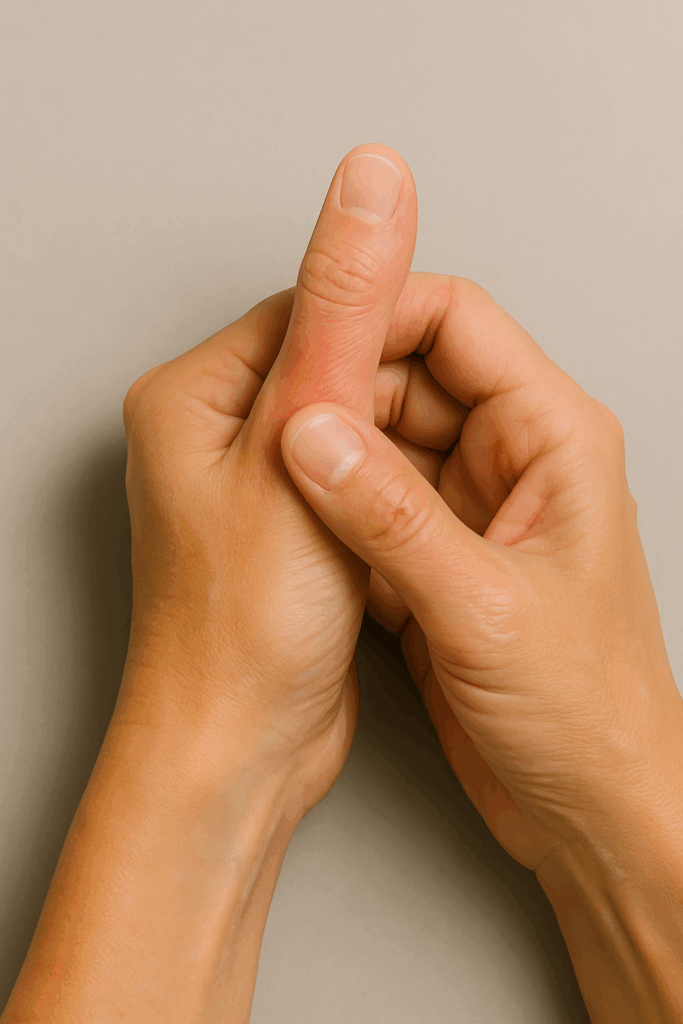
– Pain exacerbated by Finkelstein’s test (stretching of the thumb tendons).
Causes include repetitive wrist movements, prolonged exertion or hormonal factors (pregnancy, menopause).

3. Surgical Treatment

When conservative treatments (splint, anti-inflammatory medication, steroid injections) fail, surgery may be indicated. The operation consists of releasing the tendons by dividing the synovial sheath surrounding them, in order to reduce compression and inflammation.
– Performed under local or regional anaesthesia.
– A small 2 to 3 cm incision on the outer (thumb-side) edge of the wrist.
– A quick procedure (15-20 minutes), generally as day surgery.
– Excellent results, with gradual recovery over a few weeks.

4. Post-Operative Advice

– Keep the hand elevated for the first few days to limit swelling.
– Follow the wound care instructions to prevent infection.
– Take the prescribed medication to manage pain.
– Avoid sudden movements or strenuous use of the operated hand during the first few weeks.
– Contact the surgeon in the event of redness, severe pain or fever.

5. Rehabilitation and Exercises

– See a specialist physiotherapist to learn suitable exercises.
– Carry out gentle mobilisation exercises as soon as the surgeon allows.
– Do stretching and progressive strengthening exercises for the fingers and wrist.
– Do the exercises regularly to prevent stiffness and promote a full recovery.
– Follow the ergonomic advice in order to return gradually to everyday activities.