


Carpal tunnel syndrome

Carpal tunnel syndrome is a common condition resulting from compression of the median nerve at the wrist, causing pain, numbness and weakness in the hand.
Carpal tunnel syndrome is a neuropathy caused by compression of the median nerve in the carpal tunnel, an osteofibrous structure at the wrist formed by the carpal bones and the transverse carpal ligament.
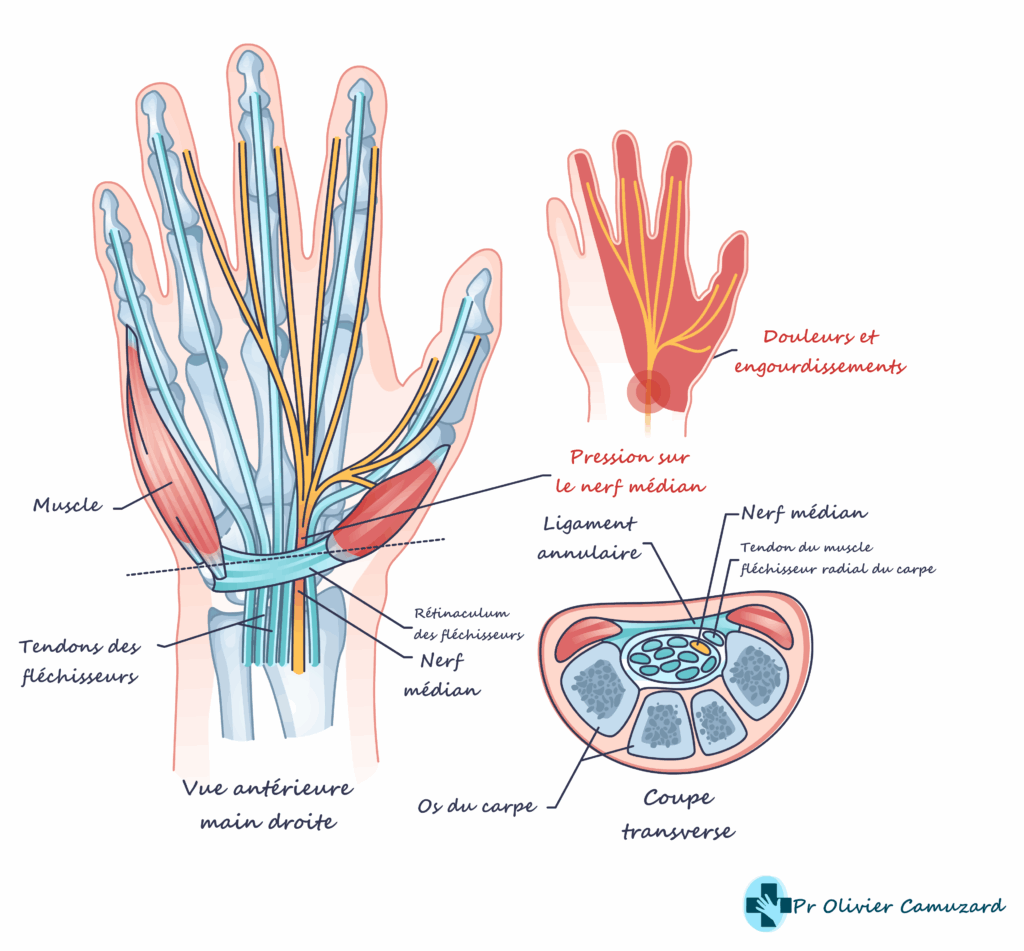
This nerve is both sensory and motor. Causes may include repetitive wrist movements, such as the use of computers or vibrating tools, as well as medical conditions such as obesity, diabetes, hypothyroidism, pregnancy and inflammatory diseases such as rheumatoid arthritis. Injuries such as fractures or dislocations of the wrist may also be involved.
Symptoms include numbness, tingling and pain in the thumb, index finger, middle finger and the radial side of the ring finger, as well as muscle weakness in the hand.
Symptoms may be intermittent or constant and are often worse at night or with activity.
The diagnosis is made by a clinical examination including Phalen’s test and Tinel’s test, together with additional investigations such as electromyography (EMG) and nerve conduction studies.

Conservative treatments include the use of wrist splints, non-steroidal anti-inflammatory drugs (NSAIDs) or corticosteroids, and changes to activities in order to avoid repetitive movements.
If necessary, surgical treatment (open or ultrasound-guided) such as carpal tunnel release may be considered.
Prevention relies on ergonomic measures and stretching and strengthening exercises.
The prognosis is generally good with appropriate management, although complications such as permanent damage to the median nerve may occur if the condition is left untreated.