


Thumb base osteoarthritis (rhizarthrosis)
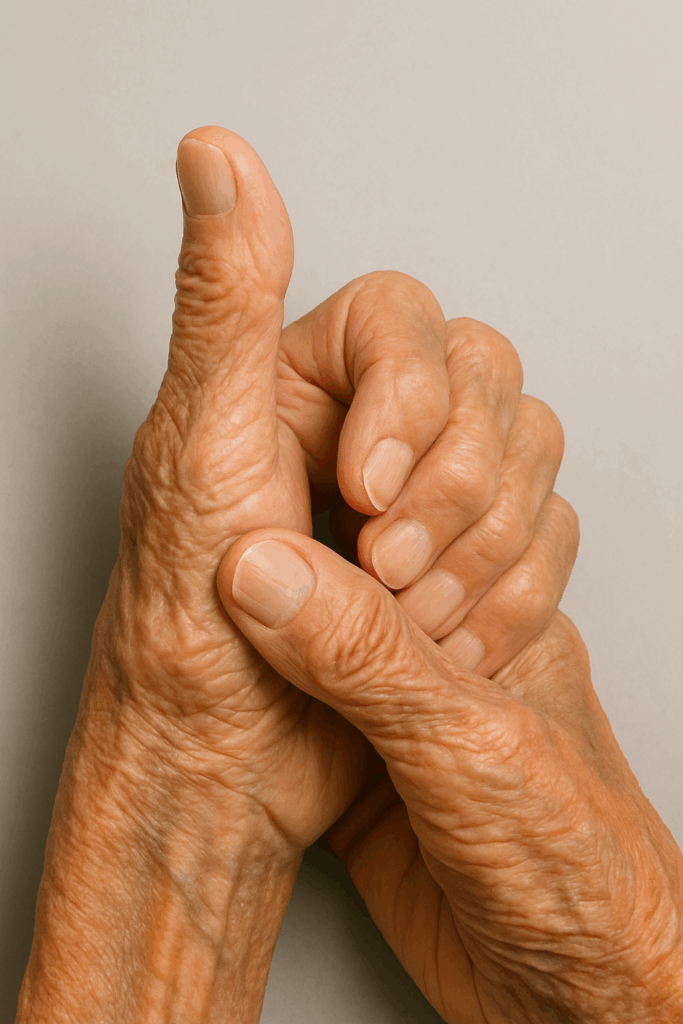
Thumb base (basal joint) osteoarthritis is osteoarthritis located at the base of the thumb, in the trapeziometacarpal joint, causing pain, loss of strength and difficulty with everyday tasks.
1. What is Thumb Base Osteoarthritis?
Thumb base osteoarthritis (rhizarthrosis) is osteoarthritis affecting the trapeziometacarpal joint at the base of the thumb. It causes pain, stiffness and loss of strength, making it difficult to grip objects. When medical treatments are no longer sufficient, surgery may be considered.

2. Symptoms and Causes
– Pain at the base of the thumb, made worse by pinching movements (opening a jar, turning a key).
– A feeling of weakness and difficulty grasping objects.
– Progressive deformity of the joint with a visible bump.
– Stiffness and loss of mobility.
Causes include ageing, overuse of the thumb and a genetic predisposition.
3. Surgical Treatment
When the pain and impairment become too great despite medical treatments, I offer an operation to restore mobility and relieve the pain.
Several techniques can be used, depending on the condition of the joint and the patient’s needs:
– Trapeziectomy: I remove the trapezium bone, which is responsible for the painful friction, in order to eliminate the source of the osteoarthritis.
– Trapeziectomy with ligament suspension: After removing the trapezium, I stabilise the joint with a ligament taken from the patient.
– Trapeziometacarpal prosthesis: I replace the worn joint with a joint prosthesis, which allows a faster recovery.
The operation is performed under regional anaesthesia and takes about 45 minutes. Recovery requires temporary immobilisation and appropriate rehabilitation to regain optimal thumb function.
4. Post-Operative Advice
– Keep the hand elevated for the first few days to limit swelling.
– Follow the wound care instructions to prevent infection.
– Take the prescribed medication to manage pain.
– Avoid sudden movements or strenuous use of the operated hand during the first few weeks.
– Contact the surgeon in the event of redness, severe pain or fever.
5. Rehabilitation and Exercises
– See a specialist physiotherapist to learn suitable exercises.
– Carry out gentle mobilisation exercises as soon as the surgeon allows.
– Do stretching and progressive strengthening exercises for the fingers and wrist.
– Do the exercises regularly to prevent stiffness and promote a full recovery.
– Follow the ergonomic advice in order to return gradually to everyday activities.
Press article
Arthrose du pouce: La douleur n'est pas une fatalité
Prof. Camuzard contributed to the article in the Nice-Matin health magazine
